
| Manufacturer | ThermElc |
|---|---|
| Part number | CF-20 New |
| Item Weight | 500 g |
| Package Dimensions | 16 x 7.6 x 4 cm; 500 g |
| Batteries | 1 AA battery required. (included) |
| Item model number | CF-20 |
| Size | CF-20 upgrade |
| Measurement Accuracy | +/-0.5% |
| Included components | CF-20 |
| Batteries included? | Yes |
| Batteries Required? | Yes |
| Battery Cell Type | Lithium Ion |


Description
Carefor Upgraded CF-20 Professional air quality detector helps you breathe cleaner air
 About this item

One of our era's greatest scourges is air pollution, on account not only of its impact on climate change but also its impact on public and individual health due to increasing morbidity and mortality. CF-20 indoor air quality meter can detect nine metrics at the same time, impossible made possible.
Based On Your Preference, Customize The Values


Long Battery Life Say Goodbye to Frequent Charging

Office

Home

RV

Hotel

School

Technical Details
Specification
|
Hardware
|
Battery |
18650 lithium battery |
|
|
Mode |
CF-20 |
||
|
Display |
LCD |
||
|
Sensors |
Temperature
|
Range |
-10°C to + 50°C |
|
Accuracy |
±0.5°C |
||
|
Humidity
|
Range |
0% to 100% RH |
|
|
Accuracy |
±5% RH |
||
|
CO2
|
Range |
0 – 5000 ppm |
|
|
Accuracy |
±50 ppm or ±6 % of reading |
||
|
TVOC
|
Range |
0.005-9.999mg/m3 |
|
|
Accuracy |
±15 % of reading |
||
|
HCHO
|
Range |
0-2mg/m3 |
|
|
Accuracy |
|
||
|
PM2.5
|
Range |
0-999ug/m3 |
|
|
Accuracy |
±10ug/m3 |
||
|
PM10
|
Range |
0-999ug/m3 |
|
|
Accuracy |
±30ug/m3 |
||
|
AQI
|
Range |
|
|
|
Accuracy |
|
||
Pollution
Hazards of air pollution
The effects of air pollution on the human body vary depending on the type of pollutant and the length and level of exposure—as well as other factors, including a person’s individual health risks and the cumulative impacts of multiple pollutants or stressors.
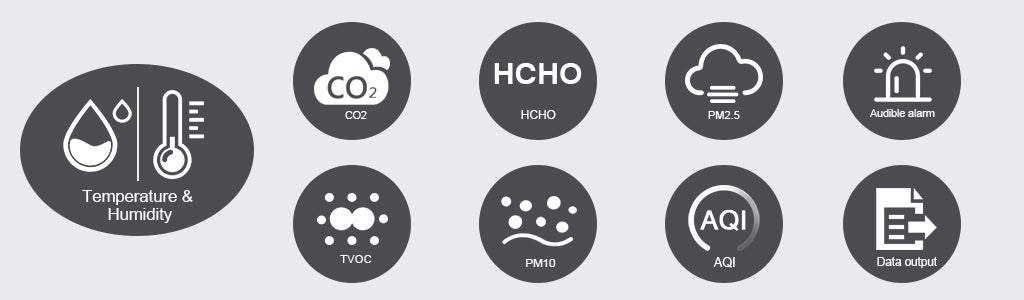
The harmful factors in the air are:
CO2
Over the past century, many scientists have shown that excessive carbon dioxide concentration does great harm to human body. As the concentration CO2 in air rises it can cause headaches, dizziness, confusion and loss of consciousness.
However, because the concentration in the natural air is only 0.037%, its harm is often ignored. With the development of industry, a large number of combustion gases are discharged, the concentration of carbon dioxide in the air is increasing, and various hazards are shown.
In particular, because of covid-19, Singapore scientists, have found that too high carbon dioxide indicates that the high concentration of human beings, will increase the speed of transmission of viruses. So in recent years, European countries have issued regulations requiring public places to provide carbon dioxide detection equipment, to avoid people gathering.
Particulate(PM2.5/PM10)
Atmospheric particulate matters are the general name of various solid and liquid granular substances in the atmosphere. Various granular substances are evenly dispersed in the air to form a relatively stable and huge suspension system, namely aerosol system. Therefore, atmospheric particles are also known as atmospheric aerosols.
In 1918, Frederick George Donnan, a British physical chemist, found that colloidal chemical processes have important similarities with cloudy atmospheric processes. Therefore, referring to the term "hydrosol", the term "aerosol" was introduced to refer to dispersed particles and droplets in the air. Aerosol is a heterogeneous system, which is composed of particles and gases. Dust, smoke, smoke, fog and haze commonly seen belong to the category of aerosol. In many literatures, atmospheric particles and atmospheric aerosols refer to particles in the atmosphere. Those with a diameter of 10 microns or less (PM10) are inhalable into the lungs and can induce adverse health effects. Fine particulate matter is defined as particles that are 2.5 microns or less in diameter (PM2.5).
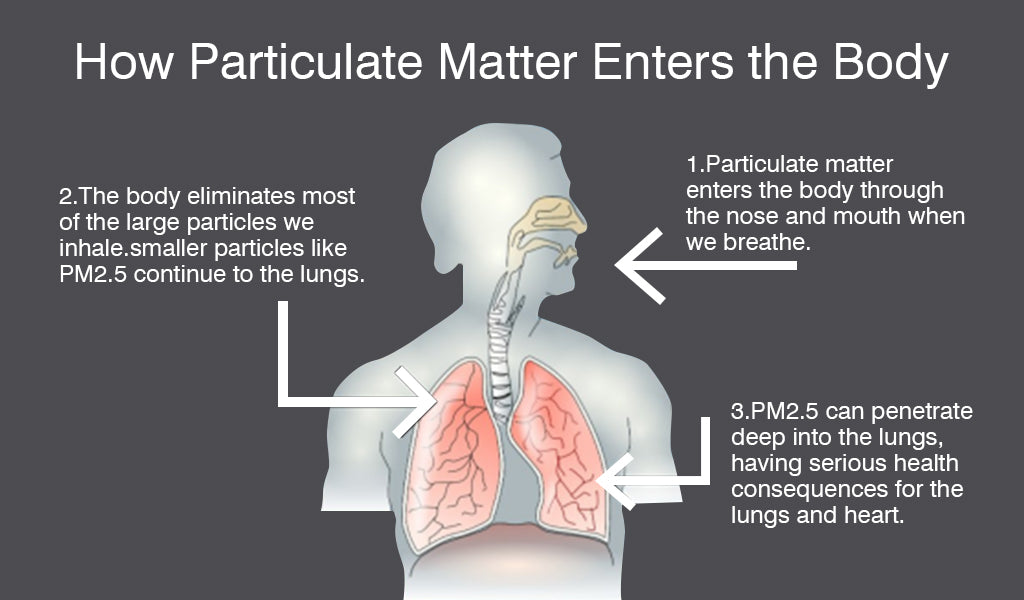
Particles with a particle size of less than 3.5 microns can be inhaled into human bronchi and alveoli and deposited, causing or aggravating respiratory diseases. A large number of particles in the atmosphere interfere with the radiation of the sun and the ground, thus affecting the regional and even global climate.
A study from Europe said that long-term exposure to polluted particles in the air would increase the risk of lung cancer. Another report said that the concentration of these particles or other air pollutants will rise in the short term and increase the risk of heart disease. European epidemiologists have found that lung cancer is significantly associated with local air pollution particles.
The researchers also found that even a brief increase in pollution levels, similar to the haze warning issued by cities, would increase the risk of hospitalization or death from heart failure by 2% - 3%. The study applied these data to the United States and found that if PM2.5 per cubic meter of air was reduced by 3.9 micrograms, nearly 8000 hospitalizations caused by heart failure could be avoided every year.
The products for air quality detector
Formaldehyde-HCHO
On October 27, 2017, formaldehyde was included in the list of class I carcinogens in the list of carcinogens published by the international agency for research on cancer of the World Health Organization.
On July 23, 2019, formaldehyde was listed in the list of toxic and harmful water pollutants.
Formaldehyde is a colorless and tasteless gas, but it is irritant and can stimulate human skin and mucous membrane. Formaldehyde itself is a protoplasm toxic substance and can combine with protein. High concentration formaldehyde will cause serious irritation to respiratory tract after being inhaled by human body, resulting in edema, dry eyes, tears, headache, etc
TVOC
TVOC is one of the three kinds of indoor air quality pollution. TVOC mainly from fuel combustion and transportation; indoors, it mainly comes from combustion products such as coal and natural gas, smoke from smoking, heating and cooking, adhesives, coatings, paints, plates and wallpaper in building and decoration materials, furniture, household appliances, furniture, detergents and human body emissions. There are nearly a thousand kinds.
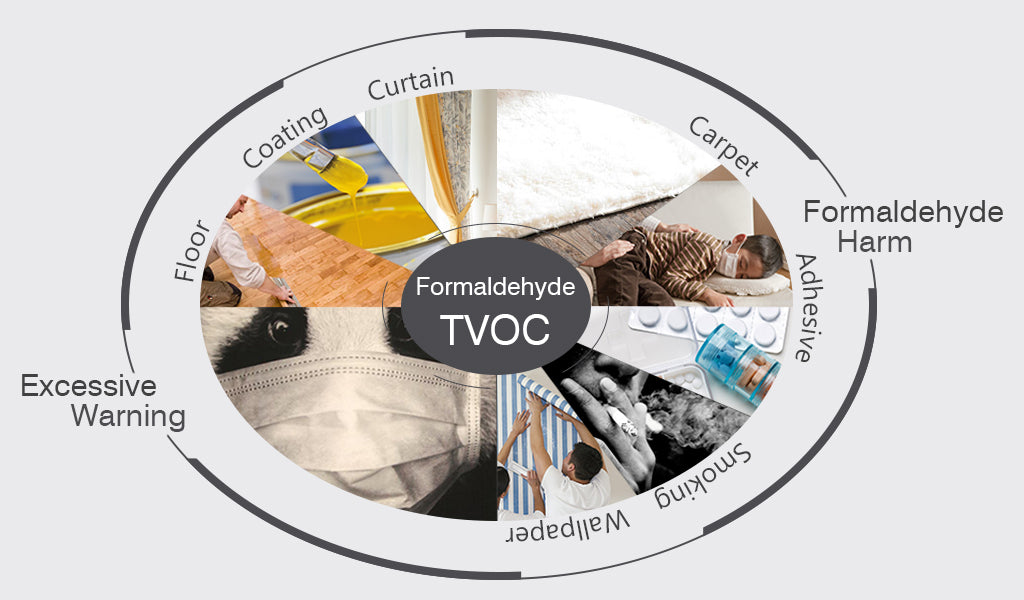
TVOC has pungent smell, and some compounds are genotoxic. TVOC can cause the imbalance of immune level, affect the function of central nervous system, and produce conscious symptoms such as dizziness, headache, drowsiness, weakness and chest tightness; It may also affect the digestive system, such as loss of appetite and nausea. In serious cases, it may damage the liver and hematopoietic system, and cause allergic reactions.
FAQ
General Product Overview
Q1: What is the difference between the CF-20 and the CF-20 DL?
- CF-20 air quality monitor (Standard): Provides real-time, high-accuracy air quality monitoring on an LCD screen. It is designed for immediate "at-a-glance" readings.
- CF-20DL data logging air detector: Includes all features of the standard model but adds an internal memory chip. It can record and store up to one year of history data, which you can export to a computer as a CSV/Excel file for professional analysis.
Q2: What pollutants do these models detect? Both the CF-20 and CF-20 DL are 10-in-1 monitors that track:
- Carbon Dioxide (CO2): Uses High-precision NDIR CO2 (sensor) technology for precision.
- Particulates: PM2.5 and PM10 tester (Fine dust and allergens).
- Chemicals: HCHO (Formaldehyde) detector for home and TVOC air monitor with history logs
- Environment: Temperature, Humidity, AQI (Air Quality Index), Date, and Time.
Setup & Accuracy
Q: How do I calibrate the CF-20 series?
A: For the most accurate results, the sensors need to establish a baseline:
- Take the device to a well-ventilated area or outdoors.
- Power off the device, then long-press the three buttons together to enter calibration mode (a 200-second countdown will appear).
- Leave the device in fresh air for at least 4 to 6 hours during its first use to stabilize the sensors.
Sensor Performance & Technical Accuracy
Q1.How accurate are the sensors in the CF-20?
A1: The CF-20 series uses medical-grade NDIR (Non-Dispersive Infrared) technology for CO2 and Laser Scattering sensors for PM2.5.
- CO2 Accuracy: ±50ppm or ±5% of reading.
- PM2.5 Accuracy: ±10µg/m³.
- Lifespan: The industrial-grade CO2 sensor is rated for a service life of up to 15 years, significantly longer than standard consumer electrochemical sensors.
Q2: Why do I get different readings from two devices in the same room?
A2: Air is not a static "soup"; it moves in micro-climates. One device may be closer to a window (higher O2) or a corner with stagnant air (higher CO2). Additionally, all professional sensors have a "tolerance" (margin of error). If two units are within 10% of each other, they are both functioning perfectly.
Q3: Why is my CO2 reading stuck at 400?
A3: 400 ppm is the global baseline for "fresh outdoor air." The device is calibrated to treat 400 as the "zero point." If your indoor air is excellent or you have windows open, the reading will stay at 400. To test the sensor, breathe directly onto the back of the unit; you should see the number spike immediately.
Understanding Chemicals & TVOCs
Q1: Total Volatile Organic Compounds (TVOCs) are gases emitted from solids or liquids. Common sources include:
- Household: Cleaning sprays, air fresheners, and perfumes.
- Building: Formaldehyde tester for new furniture (off-gassing), detect VOCs from paints, and carpets.
- Human Activity: Cooking oils and even high concentrations of human breath in an unventilated room.
Q2: What is a "TVOC Baseline" and why does it matter?
A2: The TVOC sensor needs a "clean air" reference to work correctly. Upon first use, the device requires a 24-48 hour "burn-in" period to stabilize. During this time, the USB rechargeable indoor air sensor learns the baseline of your environment to ensure future spikes are reported accurately.
Q3: Can I reduce my chemical (TVOC) readings?
A3: Yes. The most effective steps are:
- Ventilation: Open windows to flush the air.
- Source Control: Identify the "smell" or source (like a new rug) and move it to a ventilated area.
- Purification: Use an air purifier with a thick Activated Carbon filter.
Detection Capabilities
Q1: Does the CF-20 detect Formaldehyde (HCHO)?
A1: Yes. Unlike many monitors that group HCHO into a general VOC score, the CF-20 has a dedicated HCHO sensor to help you specifically monitor the off-gassing from building materials and pressed-wood furniture.
Q2: Can it detect Cigarette Smoke or Wildfire Smoke?
A2: Absolutely. The Laser PM2.5 sensor is specifically designed to detect the microscopic particulates found in smoke. The CF-20 is an essential tool for residents in wildfire-prone areas to know when to seal windows and run air purifiers.
Q3: Does it detect Mold?
A3: The device does not "count" mold spores, but it monitors the Mold Growth Index—specifically high humidity (>60%) and stagnant air (high CO2). By keeping your humidity between 30-50%, you can effectively prevent mold before it starts.
Display & Power
Q1: Can I use the device in my bedroom at night?
A1: Yes. The CF-20 series features an Auto-Dimming function. After approximately 4 minutes of inactivity, the screen will dim to a low-light mode so it doesn't disturb your sleep while it continues to monitor the air.
Q2: How long does the battery last?
A2: The device features a 2600mAh rechargeable lithium battery.
- Cordless Use: Expect 4 to 8 hours of continuous monitoring on a full charge.
- Long-Term Use: For 24/7 monitoring, it is recommended to keep the device plugged into a standard 5V USB power source (like a phone charger).
Q3: Can I turn off the alarm sound?
A3: Yes. When an alarm is triggered (e.g., CO2 levels exceed the healthy threshold), the display will flash red and beep. You can short-press the power button to mute the audible buzzer at any time.
Q4: How do I re-calibrate the sensors?
A4: If your readings seem "sticky" or inaccurate:
- Power off the device.
- Long-press the three buttons together to enter calibration mode (a 200s countdown will appear).
- Leave the device in a well-ventilated, fresh-air environment for 4–6 hours. This will reset the CO2 and TVOC zero-points.
Q5: Why is my Temperature reading higher than the room?
A5: The device contains a high-capacity battery. During charging or heavy use, internal heat can cause the temperature reading to rise by 1-2°C. For the most accurate "ambient" temperature, use the device while it is unplugged or placed in an area with a slight breeze.
Technical Troubleshooting
1. Why does the CO2 reading never go below 400?
400 ppm is the standard concentration of CO2 in fresh outdoor air. Because this is the natural "floor" for our atmosphere, the device is calibrated to show 400 as the cleanest possible baseline.
2. Why are my TVOC readings "sticky" or slow to change?
Chemical sensors (TVOC/HCHO) require a "burn-in" period. If the device has been in a box or a stagnant environment for a long time, the sensors may take 24–48 hours of being powered on in fresh air to become fully responsive.
Download